


First Year of Primary School: The School Supplies List You Need and How to Manage the Cost Without the Stress

#WTF_Life


From school bags and pencil cases to notebooks, art supplies and your back-to-school budget. A practical guide to getting organised without unnecessary spending.

Starting primary school is a little bit of everything: excitement, emotion, anticipation and a never-ending list of school supplies.

Suddenly, you need to find a school bag, pencil case, pencils, erasers, coloured pencils, markers, notebooks, folders, glue, scissors, a water bottle, a lunch box and whatever else the teacher asks for.

And here comes the first important piece of advice: you don’t need to buy everything at once.

Getting ready for the first year of primary school becomes much easier when you separate what your child actually needs from what can wait until you receive the school’s final list and, most importantly, decide how much you want to spend. School supplies are one of those expenses that can seem small when you look at them individually, but once you add everything together, the total starts to grow.

And that’s exactly what What the Finance | Life is about: looking at everyday life a little more practically and finding ways to organise it better, without making it more complicated.

 

What does your child actually need for their first year of primary school?

Before you start shopping, keep one thing in mind: the school’s and teacher’s final list should always come first. Requirements can vary from one class to another. So, think of the guide below as a practical starting point to give you an idea of what you’ll need.

🎒 1. The school bag

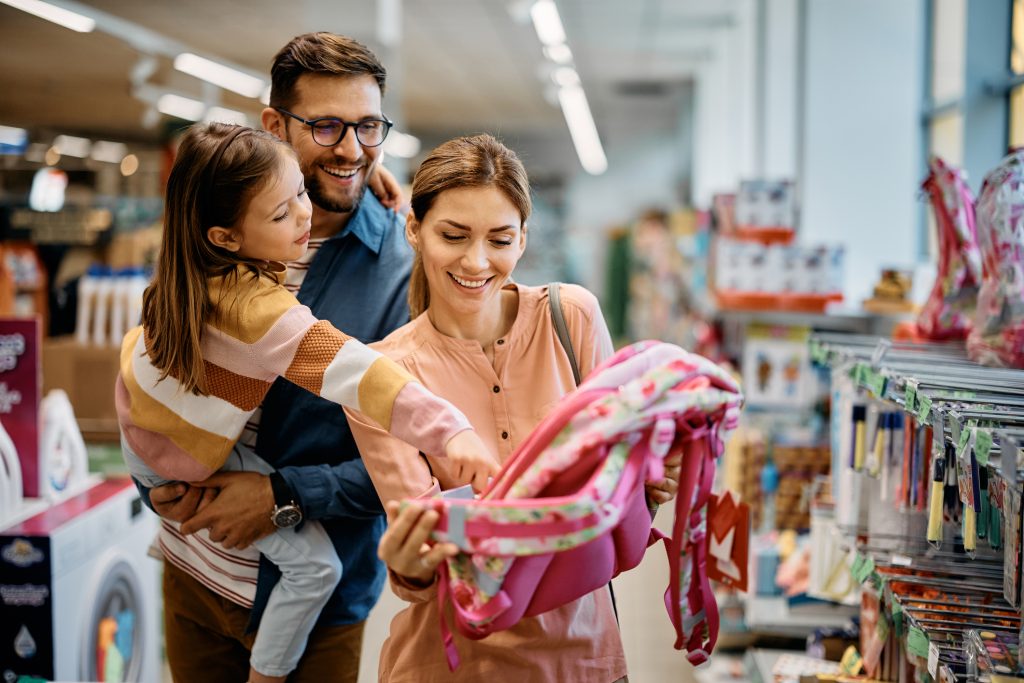
The school bag will become your child’s everyday companion. So it’s worth giving a little more thought to practicality and a little less to how impressive it looks.

Look for a bag that is:

  • durable,
  • equipped with compartments so your child can organise their things,
  • fitted with an external bottle pocket,
  • large enough to fit the essentials without becoming unnecessarily heavy.

And, of course, let your child have a say. If they want a bag featuring their favourite character, that can be important to them.

Just make sure their favourite character comes with a bag they can actually use comfortably.

More affordable options start at around  €20–30, while branded or more durable bags can cost around €35–55.  

Snappi tip 

Go for a trolley bag. If this is your first time sending a child to school, you’ll be surprised by how much weight they’ll need to carry every day!

Small parenting hack   

Before you buy, let your child open the zips and compartments themselves. If they struggle in the shop, they’ll probably struggle at school too.

✏️ 2. The pencil case and basic stationery

Your child’s pencil case doesn’t need to look like a portable office.

The basics usually include:

  • 2–3 HB pencils,
  • erasers,
  • a pencil sharpener with a container,
  • a small ruler,
  • coloured pencils and markers,
  • a glue stick,
  • child-safe scissors with rounded tips, if requested.

A simple pencil case can cost around  €2–5, while more organised options are around   €6–15  .

But the really important thing here isn’t the pencil case itself. It’s the small stash you’ll keep at home. Because at some point, the eraser will disappear, the pencil will break, the glue will run out and something will inevitably be left at school.

You don’t need an entire stationery shop at home. Just keep a few basic replacements handy so that a missing eraser doesn’t turn into an emergency.

Small parenting hack   

Get one pencil case for everyday essentials and a second, maybe barrel-shaped one, for art supplies. That way, your child won’t have to dig through a pile of markers and colouring pencils just to find their pencil and eraser.

📚 3. Notebooks and folders

This is one area where you can save money quite easily, as long as you don’t buy things before you know you need them.

Wait for the teacher’s list to find out whether specific types of notebooks are required. In the first year of primary school, notebooks in specific colours for different subjects are often requested.

A good starting point is:

  • the notebooks your child will need, plus 1–2 for rough work,
  • 1–2 spares for replacements,
  • 1–2 folders for worksheets and homework.

For this category, budget around €15, depending on quantities and what you choose.

The tip is simple:   

Don’t buy 15 notebooks just because they’re on sale if you don’t know whether you’ll need them. A bargain isn’t really a bargain if you buy something you won’t use.

🎨 4. Coloured pencils, markers and craft supplies

This is where the most creative part of the school list begins. Depending on the class requirements, you may need:

  • 12-colour pencils,
  • crayons,
  • markers,
  • a drawing pad,
  • coloured card or craft paper,
  • glue,
  • scissors,
  • watercolours and brushes.

For budget-friendly options, allow around   €15–20 for this category.

And there’s one rule worth teaching your child from day one:

 Every marker goes back in the pencil case with its cap on. It’s a small detail, but it can save you from replacing dried-out markers throughout the year.


🥪 5. Water bottle, lunch box and lunch bag

They may not always appear on the school’s official list, but they’re almost certainly going to become part of the daily routine.

The water bottle should ideally be:

  • easy for your child to open and close,
  • leak-proof,
  • durable,
  • easy to clean.

The same goes for lunch boxes. The key is that your child should be able to use them independently.

As a guide, allow around €8–15 for a water bottle and €10–20 for a lunch bag.

Parenting tip

When it comes to lunch boxes, you can use the ones you already have at home, especially since one probably won’t be enough.

Write your child’s name on them with a permanent marker.

If your child stays for the full-day school programme, find out whether food is heated at school. If it isn’t, you may need an insulated lunch container, which can cost €20 or more.
 

💶 How much do school supplies cost for the first year of primary school?


This is the question that matters most when you get to the checkout. The answer depends on the school’s requirements, the brands you choose and whether you go for budget-friendly or more premium options.

For a first estimate, a basic budget could look like this:

School item                                                                  Estimated cost

School bag                                                                      €25–50

Pencil cases                                                                    €8–15

Notebooks and folders                                                 €15

Pencils, erasers, sharpener, etc.                                 €5–10

Coloured pencils and markers                                    €5–10

Art and craft supplies                                                 €5–10

Glue, scissors, etc.                                                       €5–8

Water bottle                                                                  €8–15

Lunch box/lunch bag                                                   €10–20

Total                                                                                 approximately €81–153

The latest 2026 estimate we’re using as a reference puts the cost of basic school supplies for children in the first years of primary school at around  €100–120, excluding the school bag, water bottle and lunch bag.

So, if you want one practical number to keep in mind, an initial budget of around €100–150 is a reasonable starting point for the essentials, provided you stick to budget-friendly to mid-range options.

And here’s another useful finance tip:

Don’t just look at the price of each item. Look at the total budget. That’s why it helps to decide   how much you want to spend before you start shopping.

🧠 Your real school budget doesn’t end in September


The initial shopping trip is only chapter one. Throughout the year, you’ll need replacements, consumables and those small purchases you hadn’t thought about. And at some point, you’ll hear: “Mum, dad, my teacher said I need to bring… tomorrow.” So instead of treating school supplies as one big September expense, think of them as a small family budget that you can keep in mind throughout the school year.

💳 What if you want to spread the cost?


There’s one more thing worth knowing when you’re planning your back-to-school shopping. If you find school supplies at participating online shops, you may be able to use Snappi Pay Later to split an eligible purchase into 4 interest-free instalments, without a credit card. The service is available at participating online stores.

Why can this be useful for a family? Not because Pay Later makes a purchase cheaper.   

It doesn’t.

It can simply change how the payment is spread out, so a larger, planned expense doesn’t all come out of your available budget at one particular moment. And that’s another tool you can keep in mind when managing your finances.

Snappi, Greece’s first neobank licensed by the European Central Bank, offers Pay Later through its app. The service is available at participating online shops, with a network of more than 100 e-commerce businesses, including categories such as children’s products and toys.

If you choose this option, it’s worth remembering the basic rule behind any flexible payment method: Don’t buy something just because you can pay for it later. Choose a payment method that works for a purchase you’ve already planned and can comfortably afford. That way, Pay Later can work as a budgeting tool rather than an excuse to spend more.
 

💡6 small tricks to make school life easier


  1. Put your child’s name on everything

School bag, pencil case, water bottle, lunch box, folders and as many school supplies as possible. In a classroom full of similar-looking things, a name can solve a lot of problems.

  1. Don’t buy the whole year in September

Keep a small stash at home and replace things as needed. That way, you can also avoid unnecessary purchases.

  1. Let your child be part of the process

It’s much easier for children to learn how to organise their things when they know what they have and where it belongs. Let your child choose where possible and show them where each item should go.

  1. Gradually make the school bag their responsibility

They may need your help during the first few days. The goal, though, is for them to gradually learn to pack their own bag.

  1. Create a small “school station” at home

A dedicated spot for pencils, erasers, a sharpener, glue and other essentials can make everyday life much easier. And, most importantly, it can reduce the daily:  “Mum, where’s the glue?”

  1. Don’t aim for perfection

Your child isn’t just learning letters and numbers. They’re learning how to organise themselves, work with others, ask for help, look after their belongings and gradually become more independent. And that doesn’t happen on day one.
 

❤️ The most important thing they’ll take with them


The first year of primary school isn’t a shopping list. It’s the beginning of a new daily routine.

They’ll forget notebooks. They’ll lose erasers. They’ll come home with a marker missing its cap. They’ll need more glue than you expected. They might come home with a little stone they consider a “treasure” and, of course, there will be days when the school bag is organised only in theory, and that’s okay.

The goal is for your child to start feeling that   they can do things on their own. All you need to do is give them the space, the time and the right tools. 😊


Read also

Lorem ipsum dolor sit amet, consectetur adipiscing elit. Ut elit tellus, luctus nec ullamcorper mattis, pulvinar dapibus leo.

First Year of Primary School: The School Supplies List You Need and How to Manage the Cost Without the Stress

#WTF_Life


From school bags and pencil cases to notebooks, art supplies and your back-to-school budget. A practical guide to getting organised without unnecessary spending.

Starting primary school is a little bit of everything: excitement, emotion, anticipation and a never-ending list of school supplies.

Suddenly, you need to find a school bag, pencil case, pencils, erasers, coloured pencils, markers, notebooks, folders, glue, scissors, a water bottle, a lunch box and whatever else the teacher asks for.

And here comes the first important piece of advice: you don’t need to buy everything at once.

Getting ready for the first year of primary school becomes much easier when you separate what your child actually needs from what can wait until you receive the school’s final list and, most importantly, decide how much you want to spend. School supplies are one of those expenses that can seem small when you look at them individually, but once you add everything together, the total starts to grow.

And that’s exactly what What the Finance | Life is about: looking at everyday life a little more practically and finding ways to organise it better, without making it more complicated.


What does your child actually need for their first year of primary school?

Before you start shopping, keep one thing in mind: the school’s and teacher’s final list should always come first. Requirements can vary from one class to another. So, think of the guide below as a practical starting point to give you an idea of what you’ll need.

🎒 1. The school bag

The school bag will become your child’s everyday companion. So it’s worth giving a little more thought to practicality and a little less to how impressive it looks.

Look for a bag that is:

  • durable,
  • equipped with compartments so your child can organise their things,
  • fitted with an external bottle pocket,
  • large enough to fit the essentials without becoming unnecessarily heavy.

And, of course, let your child have a say. If they want a bag featuring their favourite character, that can be important to them.

Just make sure their favourite character comes with a bag they can actually use comfortably.

More affordable options start at around  €20–30, while branded or more durable bags can cost around €35–55.  

Snappi tip 

Go for a trolley bag. If this is your first time sending a child to school, you’ll be surprised by how much weight they’ll need to carry every day!

Small parenting hack   

Before you buy, let your child open the zips and compartments themselves. If they struggle in the shop, they’ll probably struggle at school too.

✏️ 2. The pencil case and basic stationery

Your child’s pencil case doesn’t need to look like a portable office.

The basics usually include:

  • 2–3 HB pencils,
  • erasers,
  • a pencil sharpener with a container,
  • a small ruler,
  • coloured pencils and markers,
  • a glue stick,
  • child-safe scissors with rounded tips, if requested.

A simple pencil case can cost around  €2–5, while more organised options are around   €6–15  .

But the really important thing here isn’t the pencil case itself. It’s the small stash you’ll keep at home. Because at some point, the eraser will disappear, the pencil will break, the glue will run out and something will inevitably be left at school.

You don’t need an entire stationery shop at home. Just keep a few basic replacements handy so that a missing eraser doesn’t turn into an emergency.

Small parenting hack   

Get one pencil case for everyday essentials and a second, maybe barrel-shaped one, for art supplies. That way, your child won’t have to dig through a pile of markers and colouring pencils just to find their pencil and eraser.

📚 3. Notebooks and folders

This is one area where you can save money quite easily, as long as you don’t buy things before you know you need them.

Wait for the teacher’s list to find out whether specific types of notebooks are required. In the first year of primary school, notebooks in specific colours for different subjects are often requested.

A good starting point is:

  • the notebooks your child will need, plus 1–2 for rough work,
  • 1–2 spares for replacements,
  • 1–2 folders for worksheets and homework.

For this category, budget around €15, depending on quantities and what you choose.

The tip is simple:   

Don’t buy 15 notebooks just because they’re on sale if you don’t know whether you’ll need them. A bargain isn’t really a bargain if you buy something you won’t use.

🎨 4. Coloured pencils, markers and craft supplies

This is where the most creative part of the school list begins. Depending on the class requirements, you may need:

  • 12-colour pencils,
  • crayons,
  • markers,
  • a drawing pad,
  • coloured card or craft paper,
  • glue,
  • scissors,
  • watercolours and brushes.

For budget-friendly options, allow around   €15–20 for this category.

And there’s one rule worth teaching your child from day one:

 Every marker goes back in the pencil case with its cap on. It’s a small detail, but it can save you from replacing dried-out markers throughout the year.


🥪 5. Water bottle, lunch box and lunch bag

They may not always appear on the school’s official list, but they’re almost certainly going to become part of the daily routine.

The water bottle should ideally be:

  • easy for your child to open and close,
  • leak-proof,
  • durable,
  • easy to clean.

The same goes for lunch boxes. The key is that your child should be able to use them independently.

As a guide, allow around €8–15 for a water bottle and €10–20 for a lunch bag.

Parenting tip

When it comes to lunch boxes, you can use the ones you already have at home, especially since one probably won’t be enough.

Write your child’s name on them with a permanent marker.

If your child stays for the full-day school programme, find out whether food is heated at school. If it isn’t, you may need an insulated lunch container, which can cost €20 or more.


💶 How much do school supplies cost for the first year of primary school?


This is the question that matters most when you get to the checkout. The answer depends on the school’s requirements, the brands you choose and whether you go for budget-friendly or more premium options.

For a first estimate, a basic budget could look like this:

School item                                                                  Estimated cost

School bag                                                                      €25–50

Pencil cases                                                                    €8–15

Notebooks and folders                                                 €15

Pencils, erasers, sharpener, etc.                                 €5–10

Coloured pencils and markers                                    €5–10

Art and craft supplies                                                 €5–10

Glue, scissors, etc.                                                       €5–8

Water bottle                                                                  €8–15

Lunch box/lunch bag                                                   €10–20

Total                                                                                 approximately €81–153

The latest 2026 estimate we’re using as a reference puts the cost of basic school supplies for children in the first years of primary school at around  €100–120, excluding the school bag, water bottle and lunch bag.

So, if you want one practical number to keep in mind, an initial budget of around €100–150 is a reasonable starting point for the essentials, provided you stick to budget-friendly to mid-range options.

And here’s another useful finance tip:

Don’t just look at the price of each item. Look at the total budget. That’s why it helps to decide   how much you want to spend before you start shopping.

🧠 Your real school budget doesn’t end in September


The initial shopping trip is only chapter one. Throughout the year, you’ll need replacements, consumables and those small purchases you hadn’t thought about. And at some point, you’ll hear: “Mum, dad, my teacher said I need to bring… tomorrow.” So instead of treating school supplies as one big September expense, think of them as a small family budget that you can keep in mind throughout the school year.

💳 What if you want to spread the cost?


There’s one more thing worth knowing when you’re planning your back-to-school shopping. If you find school supplies at participating online shops, you may be able to use Snappi Pay Later to split an eligible purchase into 4 interest-free instalments, without a credit card. The service is available at participating online stores.

Why can this be useful for a family? Not because Pay Later makes a purchase cheaper.   

It doesn’t.

It can simply change how the payment is spread out, so a larger, planned expense doesn’t all come out of your available budget at one particular moment. And that’s another tool you can keep in mind when managing your finances.

Snappi, Greece’s first neobank licensed by the European Central Bank, offers Pay Later through its app. The service is available at participating online shops, with a network of more than 100 e-commerce businesses, including categories such as children’s products and toys.

If you choose this option, it’s worth remembering the basic rule behind any flexible payment method: Don’t buy something just because you can pay for it later. Choose a payment method that works for a purchase you’ve already planned and can comfortably afford. That way, Pay Later can work as a budgeting tool rather than an excuse to spend more.


💡6 small tricks to make school life easier


  1. Put your child’s name on everything

School bag, pencil case, water bottle, lunch box, folders and as many school supplies as possible. In a classroom full of similar-looking things, a name can solve a lot of problems.

  1. Don’t buy the whole year in September

Keep a small stash at home and replace things as needed. That way, you can also avoid unnecessary purchases.

  1. Let your child be part of the process

It’s much easier for children to learn how to organise their things when they know what they have and where it belongs. Let your child choose where possible and show them where each item should go.

  1. Gradually make the school bag their responsibility

They may need your help during the first few days. The goal, though, is for them to gradually learn to pack their own bag.

  1. Create a small “school station” at home

A dedicated spot for pencils, erasers, a sharpener, glue and other essentials can make everyday life much easier. And, most importantly, it can reduce the daily:  “Mum, where’s the glue?”

  1. Don’t aim for perfection

Your child isn’t just learning letters and numbers. They’re learning how to organise themselves, work with others, ask for help, look after their belongings and gradually become more independent. And that doesn’t happen on day one.


❤️ The most important thing they’ll take with them


The first year of primary school isn’t a shopping list. It’s the beginning of a new daily routine.

They’ll forget notebooks. They’ll lose erasers. They’ll come home with a marker missing its cap. They’ll need more glue than you expected. They might come home with a little stone they consider a “treasure” and, of course, there will be days when the school bag is organised only in theory, and that’s okay.

The goal is for your child to start feeling that   they can do things on their own. All you need to do is give them the space, the time and the right tools. 😊

Lorem ipsum dolor sit amet, consectetur adipiscing elit. Ut elit tellus, luctus nec ullamcorper mattis, pulvinar dapibus leo.
Get the Snappi app

Scan the QR code to download the app

Click to download the app

or get a download link via SMS

Get the app