


What Is Investing? The Value & Importance of Investing Your Money

#WTF_Basics


Let’s clear this up right away: investing isn’t just for “people with money” or for the “super smart” who supposedly know something the rest of us don’t and never lose. And it’s definitely, definitely not what those self-appointed TikTok gurus are selling -the ones promising easy, fast profits to anyone who follows them blindly.

Think about it logically for a second: if everyone made money that easily and that fast, then everyone would just end up back where they started. That, in plain terms, comes down to inflation– one of the most fundamental concepts in economics, which we’ll break down properly in another article. For now, hold onto just this: when everyone has more money to spend, prices go up, and that’s exactly where inflation swells.

Back to investing. The truth is that an investment can get pretty complicated -but that doesn’t change its essence. And what’s the essence? Simply the way you put your money to work for you, instead of letting it sit and slowly lose value -and here, it’s not just inflation to blame, but also interest rates, which are inseparably tied to it.

If you’ve ever wondered what investing actually is -without the jargon and the impossible-to-follow concepts- this article is for you.

At Snappi, we believe managing money is genuinely hard, and let’s be honest, nobody taught us this in school. So let’s figure it out together, step by step.

What is investing, in plain terms


Investing means committing an amount of money today, expecting it to bring you more money in the future -whether that future is near or far. You put in capital now (that is, money) aiming for it to grow in value over time- through interest, dividends, or a rise in the price of what you bought.

Let’s look at a simple example: you buy a company’s share (a small piece of ownership in it) for €10. In two years it’s worth €14? Your investment turned a €4 profit. It drops to €7? You’re down €3. Here’s the key to remember: every investment carries risk. Nothing is guaranteed, and anyone promising “sure profits” is either hiding something or completely clueless.

The great ally -and the great enemy- of every investment is time. Time “judges,” usually very harshly, whether something will bear fruit or simply fizzle out.

Here’s a nice historical example: in Greece in 1922, after the Asia Minor Catastrophe, thousands of refugees arrived. The Greek state granted them plots of land -mostly in Northern Greece, where there was space- to rebuild their lives. At the same time, though, it didn’t want to take the fertile fields away from the locals. So the refugees were given seaside plots -nearly worthless back then, pure gold today, thanks to the tourism boom.

Everything changes with time; nothing stays fixed. And maybe that’s where the whole essence of investing lies: it’s something that depends on time and on everything time brings with it. Time isn’t “missing” from economics -it’s just usually well disguised. The rest, in a future article!

Mobile - Investments performance check

Investing vs Saving: what’s the difference?

Many people mix up the two terms, but they’re different things, even though both are extremely useful.

Saving

You set money aside somewhere safe, usually a bank account. The risk is nearly zero: your money is there whenever you need it. The problem? The return is also nearly zero -and here the big “enemy” strikes again: inflation.

Let’s clear a few things up here, because it’s worth it. First, the reason your money is safe in the bank is that someone guarantees it -and that someone is the state. Second, the bank “rewards” you for trusting it with your money (through the savings interest rate), but at the same time charges you “safekeeping” fees -roughly as much as it pays you. That’s why, in the end, your savings stay more or less flat.

And now you’re probably wondering: if that’s how the game works, how do banks make money? Because don’t forget – banks are private businesses that “sell” money, and very profitable ones at that. The answer: they earn precisely from the money you trust them with, because they then lend it to others, through the loans we all know. We know, the whirlwind in your head just started -but trust us, through these articles Snappi will make it all simple and clear. Just a little patience!

Investing

You put money into assets (stocks, bonds, ETFs, real estate, and more) that can grow in value in the future. The risk is higher, but so is the potential return. Generally, one basic rule applies to investing: the higher the risk, the higher the potential gains; the lower the risk, the lower the potential gains too. And when we say “risk,” we mean the chance of permanently losing the money you invested in the first place.

More simply:

    • Money you’ll need soon (say, in the next 1-2 years) or your emergency fund → saving.
    • Money you can leave to work for years → investing.

Why do we invest? How inflation eats your money


Say you have €10,000 under the “mattress” or in a 0%-interest account. (Yes, there’s a difference between interest -the actual amount- and the interest rate: the percentage that produces that amount.)

With average inflation around 3% per year (2.5% is the annual target of the European Central Bank which, yes, is also part of the picture), in 10 years that €10,000 will buy roughly €7,400 worth of goods in today’s purchasing power. Let’s leave the math aside for now and just hold onto this: “purchasing power” is how many basic goods (food, clothes, and so on) you can buy with that money.

You didn’t lose money “on paper” -the number in the account is the same. But you lost value. The same money buys less, because the nominal value of things went up (nominal value = the price on the shelf). This is the number-one reason we invest: to protect and, ideally, grow our purchasing power over time.

You’ve surely heard it: 20 years ago €100,000 got you a mid-sized house, while today the same money won’t even get you close. The money’s the same, the house is the same (its materials didn’t change), the neighborhood’s the same -what changed is its nominal value. Value can be “covered” with money; money, though, can’t always be covered with value.

Compound Interest Growth

Compounding: the “magic” in investing


If there’s one concept you absolutely need to grasp about what investing is and why it matters so much, it’s compound interest.

Compounding means you earn returns not just on your original capital, but also on the returns you’ve already earned. Your interest, in other words, earns interest of its own.

A numerical example. You invest €100 at an average annual return of 10% (we say “average” because the return isn’t fixed – it changes day to day):

– After year 1: €110.
– After year 2: €121 (you earn interest on year one’s €10 too).
– After 10 years: about €259 -without adding a single extra euro.

So your net profit is €159, or a total return of 159%. What does that mean? That for every €1 you invested 10 years ago, you got back €1.59. (Quick note: when an investment earns you a profit equal to your original capital, we say it returned 100% -meaning it doubled your money.)

Compounding works exponentially (think of it as multiplication on steroids), and its most important ingredient is -again- time. That’s why we say the best day to start was yesterday; the second best is today.

Risk & Return: two sides of the same coin


In the investing world, a fundamental principle applies that you should never forget:

The higher the potential return, the higher the risk.

Return is, in a sense, your reward for the risk you take on. There’s no investment with high return and zero risk – if there were, everyone would only do that.

The goal isn’t to avoid risk entirely (impossible), but to understand how much risk you can handle -this is called risk tolerance– and invest accordingly. Risk tolerance is completely subjective, often changing, and tied to your own personality.

How you reduce risk: Diversification

One of the smartest ways to manage risk is diversification – the classic “don’t put all your eggs in one basket.” And a portfolio, for the record, is exactly that “basket”: the full set of assets you’ve invested in.

Instead of throwing all your money into one stock, you spread it (not necessarily equally) across many different companies, sectors, or even countries. That way, if one goes sideways, you’re not wiped out.

This is where ETFs (Exchange Traded Funds) come in: a “ready-made basket” of many stocks together, giving you instant diversification without having to buy dozens of stocks one by one. That’s why they’re among the most popular tools for beginners.
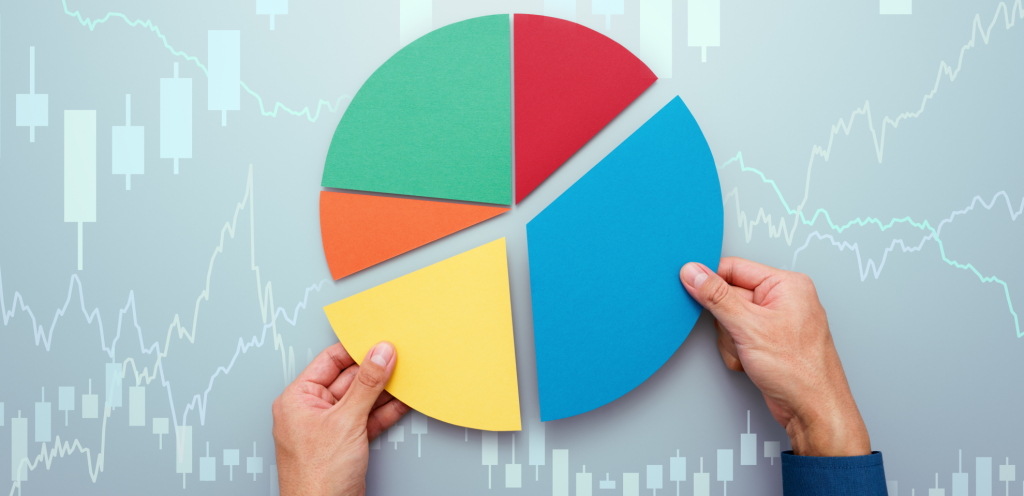
Pie chart

Types of investments: a quick look


Stocks: An ownership share in a company. Higher risk, higher potential return.
Bonds: Essentially you lend money (to governments or companies) and receive interest. Generally lower risk than stocks.
ETFs & Mutual Funds: Ready-made “baskets” of many investments together. Ideal for diversification, and usually lower risk.
Real Estate: Buying property for rent or appreciation. Requires, of course, more upfront capital. (Appreciation = when you add features to an asset that make it more attractive, and therefore more expensive to sell. Classic example: you buy an abandoned house in Santorini for €50,000, pour another €50,000 into a luxury renovation, and sell it for €300,000. That’s €200,000 in appreciation, mostly thanks to the location.)

How to start investing (the basic steps)

1. Emergency fund first. Before investing anything, make sure you have 2-4 months’ salary set aside for the unexpected.
2. Clarify your goals. What are you investing for? In how long, and why, do you want it?
3. Understand your risk profile. How comfortable are you with the ups and downs (the swings in prices)?
4. Start small & steady. You don’t need thousands of euros. Many start with small, regular amounts each month.
5. Think long-term. Time and compounding are your allies.

Conclusion: why investing matters

Investing isn’t gambling, nor a privilege of the few. It’s a tool. It’s how you stop inflation from silently eating your hard work, and build something for your future -with realism, discipline, and patience. The secret isn’t finding the “magic” investment, but starting early, staying consistent, and letting time do its job.


📌 FAQ

Do I need a lot of money to invest? No. Today you can start with small amounts, even a few dozen euros a month, through modern platforms.

Is it certain I’ll make a profit? No. No investment is guaranteed. There’s always risk, which is why diversification and a long-term horizon matter so much.

What’s the difference between saving and investing? Saving is safe but with almost zero return. Investing carries risk, but gives you the chance to grow your capital.

About the Authors


Angela Katopodi is Head of Investment Products & Operations at Snappi, with extensive experience in the banking sector, and expertise in the development of investment products and services, as well as operations. She is passionate about inspiring more people to discover and understand the investment industry.

Dr. George Tsomidis is an academic and the Senior Advisor at Snappi’s FinTech & AI Lab. He is passionate about making complex financial concepts understandable for a general audience.

Disclaimer: This article does not constitute investment advice in any way. It is strictly for educational and informational purposes. Every investment decision involves risk and should be made after your own extensive research and/or advice from a certified professional.

Read also

Lorem ipsum dolor sit amet, consectetur adipiscing elit. Ut elit tellus, luctus nec ullamcorper mattis, pulvinar dapibus leo.

What Is Investing? The Value & Importance of Investing Your Money

#WTF_Basics


Let’s clear this up right away: investing isn’t just for “people with money” or for the “super smart” who supposedly know something the rest of us don’t and never lose. And it’s definitely, definitely not what those self-appointed TikTok gurus are selling -the ones promising easy, fast profits to anyone who follows them blindly.

Think about it logically for a second: if everyone made money that easily and that fast, then everyone would just end up back where they started. That, in plain terms, comes down to inflation– one of the most fundamental concepts in economics, which we’ll break down properly in another article. For now, hold onto just this: when everyone has more money to spend, prices go up, and that’s exactly where inflation swells.

Back to investing. The truth is that an investment can get pretty complicated -but that doesn’t change its essence. And what’s the essence? Simply the way you put your money to work for you, instead of letting it sit and slowly lose value -and here, it’s not just inflation to blame, but also interest rates, which are inseparably tied to it.

If you’ve ever wondered what investing actually is -without the jargon and the impossible-to-follow concepts- this article is for you.

At Snappi, we believe managing money is genuinely hard, and let’s be honest, nobody taught us this in school. So let’s figure it out together, step by step.

What is investing, in plain terms


Investing means committing an amount of money today, expecting it to bring you more money in the future -whether that future is near or far. You put in capital now (that is, money) aiming for it to grow in value over time- through interest, dividends, or a rise in the price of what you bought.

Let’s look at a simple example: you buy a company’s share (a small piece of ownership in it) for €10. In two years it’s worth €14? Your investment turned a €4 profit. It drops to €7? You’re down €3. Here’s the key to remember: every investment carries risk. Nothing is guaranteed, and anyone promising “sure profits” is either hiding something or completely clueless.

The great ally -and the great enemy- of every investment is time. Time “judges,” usually very harshly, whether something will bear fruit or simply fizzle out.

Here’s a nice historical example: in Greece in 1922, after the Asia Minor Catastrophe, thousands of refugees arrived. The Greek state granted them plots of land -mostly in Northern Greece, where there was space- to rebuild their lives. At the same time, though, it didn’t want to take the fertile fields away from the locals. So the refugees were given seaside plots -nearly worthless back then, pure gold today, thanks to the tourism boom.

Everything changes with time; nothing stays fixed. And maybe that’s where the whole essence of investing lies: it’s something that depends on time and on everything time brings with it. Time isn’t “missing” from economics -it’s just usually well disguised. The rest, in a future article!

Mobile - Investments performance check

Investing vs Saving: what’s the difference?

Many people mix up the two terms, but they’re different things, even though both are extremely useful.

Saving

You set money aside somewhere safe, usually a bank account. The risk is nearly zero: your money is there whenever you need it. The problem? The return is also nearly zero -and here the big “enemy” strikes again: inflation.

Let’s clear a few things up here, because it’s worth it. First, the reason your money is safe in the bank is that someone guarantees it -and that someone is the state. Second, the bank “rewards” you for trusting it with your money (through the savings interest rate), but at the same time charges you “safekeeping” fees -roughly as much as it pays you. That’s why, in the end, your savings stay more or less flat.

And now you’re probably wondering: if that’s how the game works, how do banks make money? Because don’t forget – banks are private businesses that “sell” money, and very profitable ones at that. The answer: they earn precisely from the money you trust them with, because they then lend it to others, through the loans we all know. We know, the whirlwind in your head just started -but trust us, through these articles Snappi will make it all simple and clear. Just a little patience!

Investing

You put money into assets (stocks, bonds, ETFs, real estate, and more) that can grow in value in the future. The risk is higher, but so is the potential return. Generally, one basic rule applies to investing: the higher the risk, the higher the potential gains; the lower the risk, the lower the potential gains too. And when we say “risk,” we mean the chance of permanently losing the money you invested in the first place.

More simply:

    • Money you’ll need soon (say, in the next 1-2 years) or your emergency fund → saving.
    • Money you can leave to work for years → investing.

Why do we invest? How inflation eats your money


Say you have €10,000 under the “mattress” or in a 0%-interest account. (Yes, there’s a difference between interest -the actual amount- and the interest rate: the percentage that produces that amount.)

With average inflation around 3% per year (2.5% is the annual target of the European Central Bank which, yes, is also part of the picture), in 10 years that €10,000 will buy roughly €7,400 worth of goods in today’s purchasing power. Let’s leave the math aside for now and just hold onto this: “purchasing power” is how many basic goods (food, clothes, and so on) you can buy with that money.

You didn’t lose money “on paper” -the number in the account is the same. But you lost value. The same money buys less, because the nominal value of things went up (nominal value = the price on the shelf). This is the number-one reason we invest: to protect and, ideally, grow our purchasing power over time.

You’ve surely heard it: 20 years ago €100,000 got you a mid-sized house, while today the same money won’t even get you close. The money’s the same, the house is the same (its materials didn’t change), the neighborhood’s the same -what changed is its nominal value. Value can be “covered” with money; money, though, can’t always be covered with value.

Compound Interest Growth

Compounding: the “magic” in investing


If there’s one concept you absolutely need to grasp about what investing is and why it matters so much, it’s compound interest.

Compounding means you earn returns not just on your original capital, but also on the returns you’ve already earned. Your interest, in other words, earns interest of its own.

A numerical example. You invest €100 at an average annual return of 10% (we say “average” because the return isn’t fixed – it changes day to day):

– After year 1: €110.
– After year 2: €121 (you earn interest on year one’s €10 too).
– After 10 years: about €259 -without adding a single extra euro.

So your net profit is €159, or a total return of 159%. What does that mean? That for every €1 you invested 10 years ago, you got back €1.59. (Quick note: when an investment earns you a profit equal to your original capital, we say it returned 100% -meaning it doubled your money.)

Compounding works exponentially (think of it as multiplication on steroids), and its most important ingredient is -again- time. That’s why we say the best day to start was yesterday; the second best is today.

Risk & Return: two sides of the same coin


In the investing world, a fundamental principle applies that you should never forget:

The higher the potential return, the higher the risk.

Return is, in a sense, your reward for the risk you take on. There’s no investment with high return and zero risk – if there were, everyone would only do that.

The goal isn’t to avoid risk entirely (impossible), but to understand how much risk you can handle -this is called risk tolerance– and invest accordingly. Risk tolerance is completely subjective, often changing, and tied to your own personality.

How you reduce risk: Diversification

One of the smartest ways to manage risk is diversification – the classic “don’t put all your eggs in one basket.” And a portfolio, for the record, is exactly that “basket”: the full set of assets you’ve invested in.

Instead of throwing all your money into one stock, you spread it (not necessarily equally) across many different companies, sectors, or even countries. That way, if one goes sideways, you’re not wiped out.

This is where ETFs (Exchange Traded Funds) come in: a “ready-made basket” of many stocks together, giving you instant diversification without having to buy dozens of stocks one by one. That’s why they’re among the most popular tools for beginners.

Pie chart

Types of investments: a quick look


Stocks: An ownership share in a company. Higher risk, higher potential return.
Bonds: Essentially you lend money (to governments or companies) and receive interest. Generally lower risk than stocks.
ETFs & Mutual Funds: Ready-made “baskets” of many investments together. Ideal for diversification, and usually lower risk.
Real Estate: Buying property for rent or appreciation. Requires, of course, more upfront capital. (Appreciation = when you add features to an asset that make it more attractive, and therefore more expensive to sell. Classic example: you buy an abandoned house in Santorini for €50,000, pour another €50,000 into a luxury renovation, and sell it for €300,000. That’s €200,000 in appreciation, mostly thanks to the location.)

How to start investing (the basic steps)

1. Emergency fund first. Before investing anything, make sure you have 2-4 months’ salary set aside for the unexpected.
2. Clarify your goals. What are you investing for? In how long, and why, do you want it?
3. Understand your risk profile. How comfortable are you with the ups and downs (the swings in prices)?
4. Start small & steady. You don’t need thousands of euros. Many start with small, regular amounts each month.
5. Think long-term. Time and compounding are your allies.

Conclusion: why investing matters

Investing isn’t gambling, nor a privilege of the few. It’s a tool. It’s how you stop inflation from silently eating your hard work, and build something for your future -with realism, discipline, and patience. The secret isn’t finding the “magic” investment, but starting early, staying consistent, and letting time do its job.


📌 FAQ

Do I need a lot of money to invest? No. Today you can start with small amounts, even a few dozen euros a month, through modern platforms.

Is it certain I’ll make a profit? No. No investment is guaranteed. There’s always risk, which is why diversification and a long-term horizon matter so much.

What’s the difference between saving and investing? Saving is safe but with almost zero return. Investing carries risk, but gives you the chance to grow your capital.

About the Authors


Angela Katopodi is Head of Investment Products & Operations at Snappi, with extensive experience in the banking sector, and expertise in the development of investment products and services, as well as operations. She is passionate about inspiring more people to discover and understand the investment industry.

Dr. George Tsomidis is an academic and the Senior Advisor at Snappi’s FinTech & AI Lab. He is passionate about making complex financial concepts understandable for a general audience.

Disclaimer: This article does not constitute investment advice in any way. It is strictly for educational and informational purposes. Every investment decision involves risk and should be made after your own extensive research and/or advice from a certified professional.

Lorem ipsum dolor sit amet, consectetur adipiscing elit. Ut elit tellus, luctus nec ullamcorper mattis, pulvinar dapibus leo.


Get the Snappi app

Scan the QR code to download the app

Click to download the app

or get a download link via SMS

Get the app